
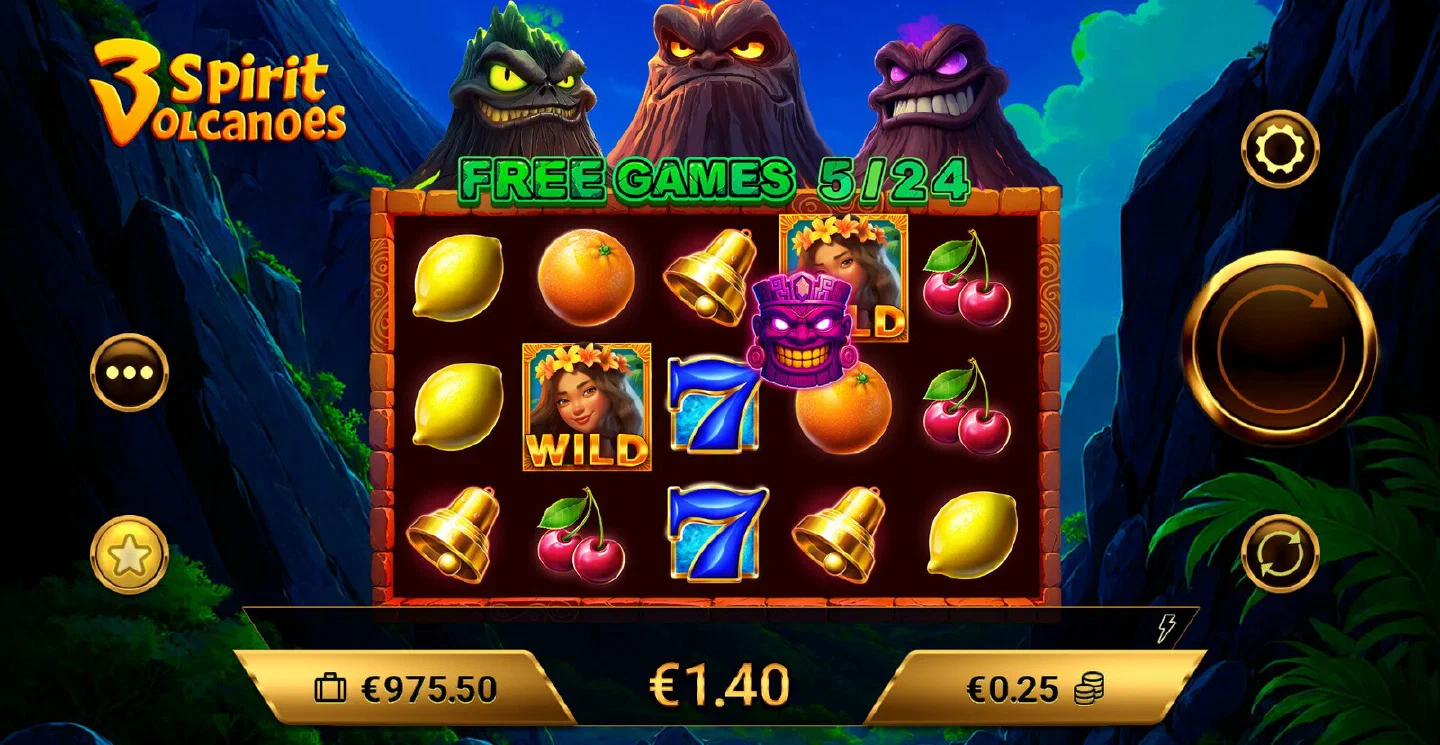
There is one honest strategy page to write about this Amigo Gaming slot, and this is it. Nothing you do changes when a volcano fires. What you can decide is the size of a spin, the number of spins, and whether to pay 98x for an entry rather than wait for three chests. Those three decisions shape the session far more than anything happening on the reels.
High volatility, translated into a session#
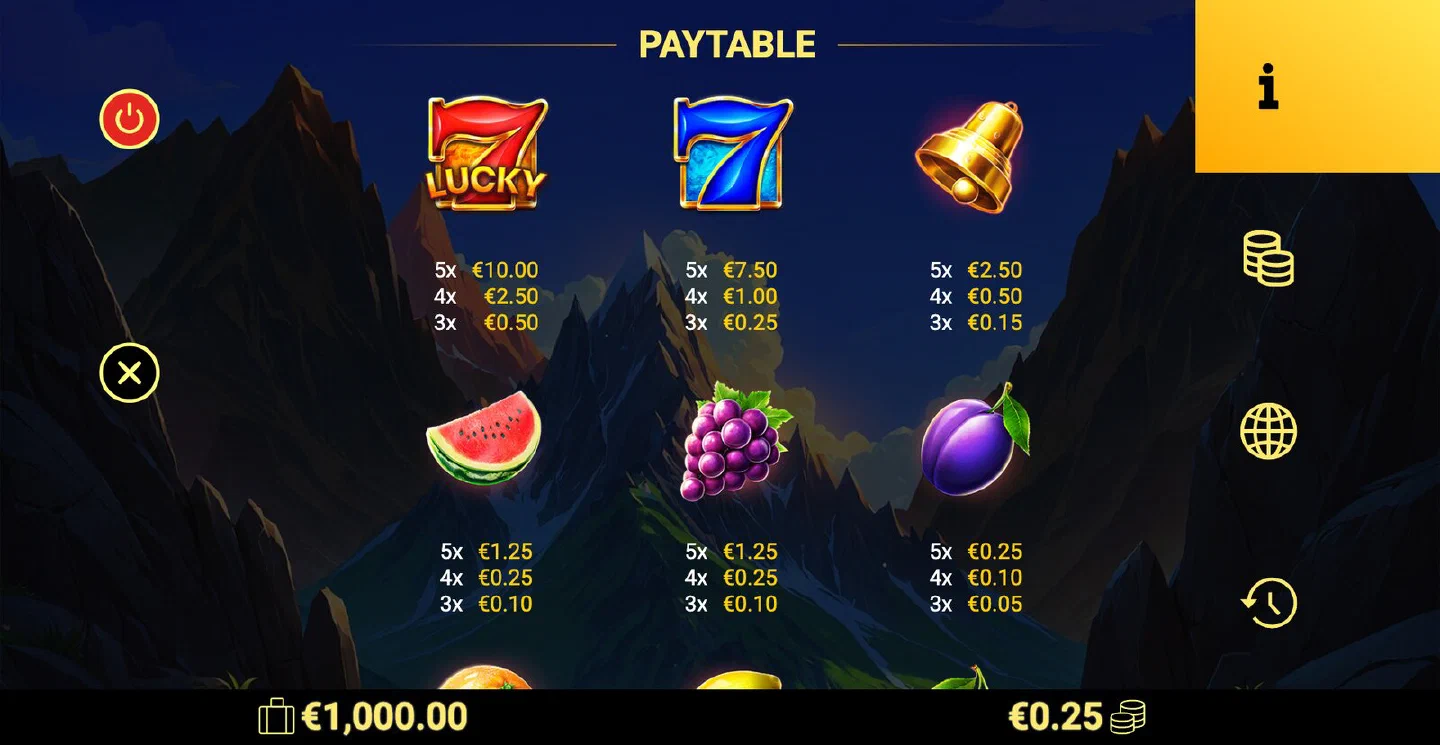
The game keeps its money for the volcanoes. That is what the High volatility label means in practice, and the paytable proves it: the best line in the base game pays 40x the total bet, while the smallest wooden mask in Pin Win pays 50x and the smallest Pick’em prize 7x. The reels fund your seat; the three bonus rounds are where the value sits.
Twenty-five fixed lines on a 5x3 grid soften that slightly. You will see small wins often enough that the balance drifts rather than drops, and the expanding WILD on reels 2 to 5 produces the occasional larger line. But drifting is the operative word. A session on this game is a long flat stretch punctuated by a round that changes the shape of the afternoon.
So the planning question is not “how much should I bet” but “how long do I need to last”. A bankroll that survives two hundred spins has two hundred chances to see chests on reels 1, 3 and 5. The same bankroll spent at four times the dial has fifty. Neither version improves your odds per spin, but the first one is far more likely to still be playing when a peak wakes up.
One rule removes a common mistake before it starts. Only one bonus runs at a time, and the number of masks a volcano has collected leaves the trigger odds exactly where they were. Nothing here rewards farming, and a counter that looks nearly full still justifies exactly the same bet as an empty one.
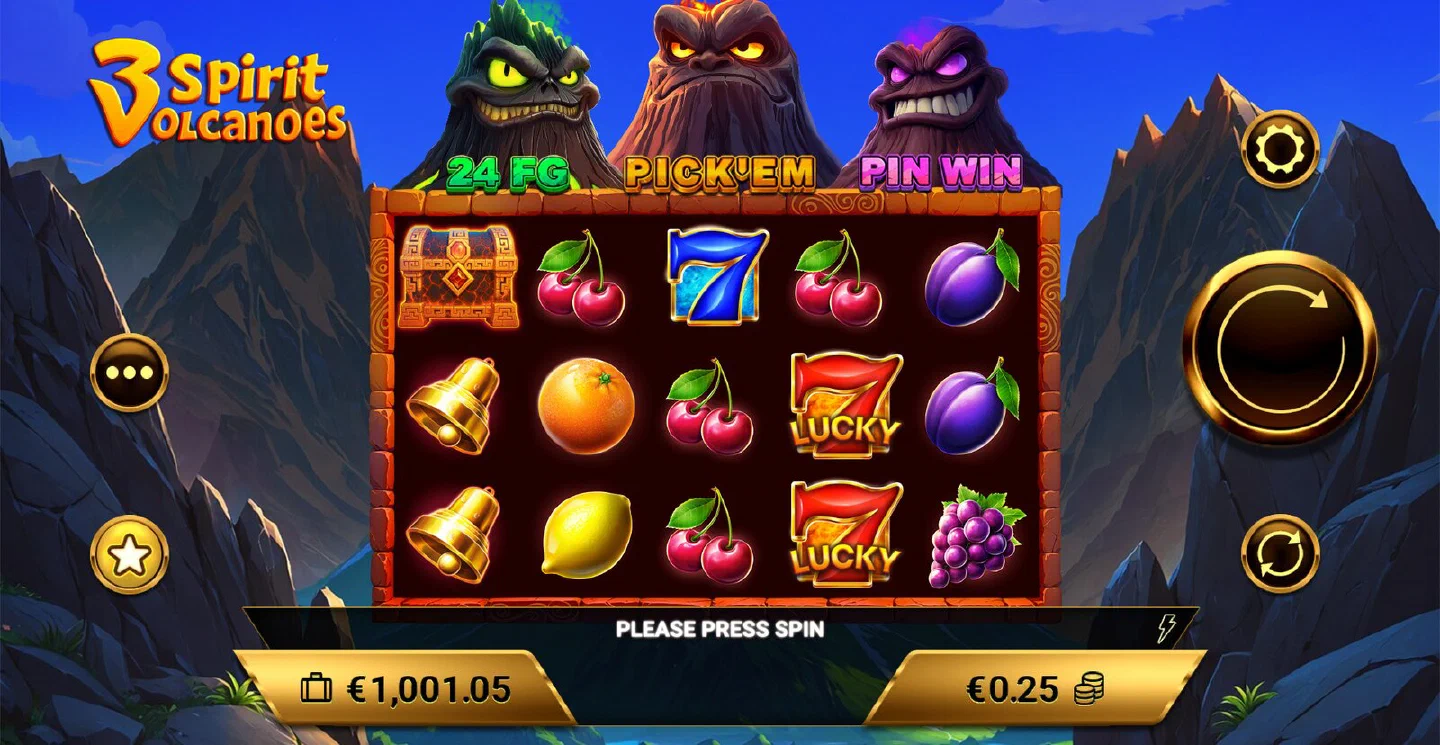
Choosing a bet inside 0.25 to 100#
The dial is the only scaling factor in the game, and everything on the paytable and in the bonus rounds moves with it.
| At this total bet | The 1,100x ceiling is | One 98x entry costs | A full Pin Win board pays |
|---|---|---|---|
| 0.25 | 275 | 24.50 | 250 |
| 100 | 110,000 | 9,800 | 100,000 |
Notice what does not change: nothing is unlocked by a bigger dial. The same 25 lines, the same three volcano rounds, the same single buy option and the same feature ladders are available at 0.25 as at 100. The bet is purely a scaling factor.
That makes the sizing arithmetic simple. Decide the budget for the session and the number of spins you want it to cover, then divide. A budget of 50 across two hundred spins gives you a 0.25 dial. The same 50 across fifty spins gives you 1.00. Both are legitimate plans; the first one plays a waiting game and the second one plays a shorter, sharper one.
A practical middle position: pick the bet where a hundred spins costs an amount you would spend on an evening out without thinking about it, then leave the dial alone for the whole session. The temptation on a high-volatility slot is always to nudge it upward after a quiet run, and that is precisely when the session budget stops meaning anything.
The buy decision: 98x, once#
98x is a session in itself. At 0.25 that is 24.50; at 1.00 it is 98; at the top of the range it is 9,800. Whatever the dial says, the trade is identical: one guaranteed entry, or 98 base spins.
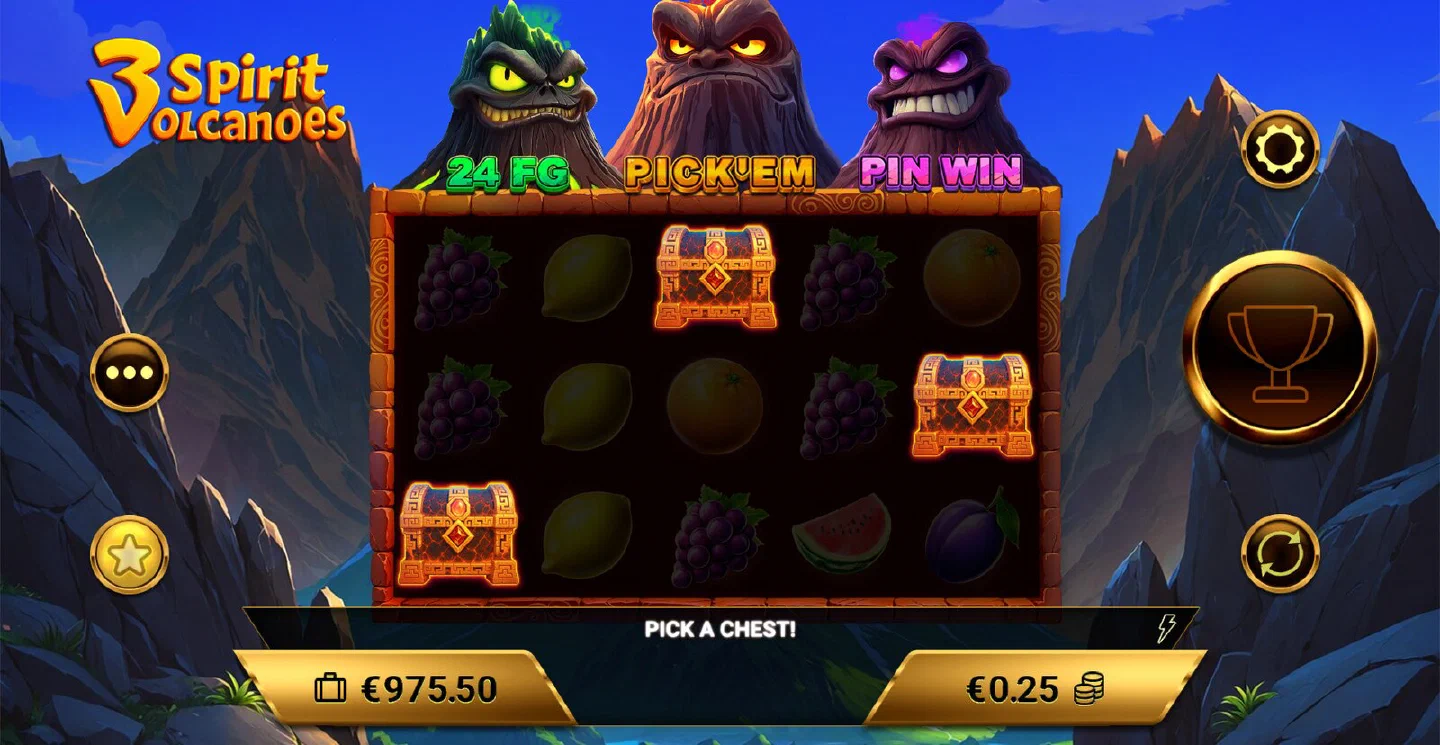
What the purchase buys is the RANDOM BONUS: the same door the chests open, behaving exactly like a natural trigger, starting with a main-game spin that lands the chests. There is one option on the menu, which is unusually honest for a buy feature but also the thing to understand before you press it: you are not choosing a round. The mask inside the chest chooses for you.
That means a bought entry can resolve three ways. It can become 24 Free Games at your current bet, the longest and most variable outcome, since Pin Win and Pick’em can both land inside it. It can become a Pick’em run of 20 picks that ends when three matching awards appear, with a floor of small prizes and a ceiling of 1000x. Or it can become a Pin Win board that either keeps resetting its three attempts and fills toward the 1000x jackpot, or stalls after three spins with a couple of fireballs paid.
The sensible way to handle that spread is to treat buys as their own budget line. Decide in advance how many you are willing to make (one, three, none) and count each as what it is: roughly a hundred spins of your session, spent at once. Buying repeatedly to chase a round that did not deliver is the fastest way to turn a planned evening into an unplanned one.
Pace: turbo, autoplay and the history icon#
Speed is a budget setting. Turbo, the lightning toggle at the right end of the message bar, shortens the spin animation; autoplay, under the spin button, takes your hand off the button entirely. Neither touches the generator, but both change how quickly the budget moves.
That cuts both ways, and it is worth being deliberate about. Turbo plus autoplay at a high bet burns a session in minutes. Autoplay alone at a flat 0.25 does something more useful: it keeps the bet steady during exactly the stretch when a human hand tends to start creeping the dial upward.
The third control is the one a plan actually runs on. The clock icon on the paytable side rail holds your round history, and it answers the only question that matters mid-session: how much of the plan is already spent. At a flat 0.25 dial that answer is arithmetic rather than instinct, because a two-hundred-spin plan is 50 and you can see exactly where you sit against it. The how-to-play page shows where all three controls live.
What the generator settles and what you settle#
The outcome belongs to the random number generator, and Amigo Gaming states that certified RNGs run across its slot catalogue alongside GLI-19 compliance and ISO/IEC 27001 information security. That is the part of the game nobody at either end of the screen influences.
Everything else is a plan. The RTP is around 96%, with panels quoting up to 96.05% depending on the casino build you open. Read the line in the game panel where you play, because it belongs to that build. The ceiling is 1,100x the total bet. The bet range is 0.25 to 100. Each of those is a number you can work with before the first spin, and the RTP page sets them out in full.
The last decision is the one people skip: where you stop. Pick both ends, a loss limit and a win figure that ends the session, and put them next to the round history. The responsible gambling page has the practical version of that, and the free demo lets you rehearse the whole plan without spending anything. When it is ready, the slot hub has the path in.
Three session shapes that work#
There are three coherent ways to spend an evening on this island, and picking one deliberately beats drifting between them.
The long flat session. Set the dial to 0.25, set autoplay to a fixed number of spins, and let the volcanoes come to you. A budget of 50 buys two hundred spins at that dial; the same 50 at a 1.00 dial buys fifty. Nothing about either figure changes the odds on a single spin, but the first one keeps the reels turning four times as long, and on a game that holds its money for the peaks that is the whole of the argument.
The short sharp session. A higher dial, fewer spins, and an acceptance that the session may end without a feature. The appeal is that every prize scales with the bet: a 300x wooden mask in Pin Win is worth four times as much at 1.00 as it is at 0.25. The risk is equally proportional, and the maths is unchanged: you are simply choosing a bigger, briefer version of the same game.
The buy session. Decide a number of entries in advance, buy them at a modest dial, and treat the base game as filler between them. At 0.25, three entries cost 73.50 in total and deliver three guaranteed rounds. This is the most predictable use of a budget in terms of what you will actually see, and the least predictable in terms of what those rounds pay. Set the break-even beside it before you start: each entry has to return 98x the total bet to give its own price back, which one MAX wooden mask at 300x does three times over, a GREEN Pick’em award at 100x does just about, and a Pin Win board that stalls early does not do at all.
Each of those is a plan. What is not a plan is starting on the first, drifting into the second after a quiet stretch, and finishing on the third to recover. Naming that sequence in advance is most of the defence against it, because the drift never announces itself as a decision.
Reading a session while it runs#
You need only two checkpoints while a session runs, and both take seconds.
The first is arithmetic rather than instinct. At a flat 0.25 dial a fifty-spin budget is 12.50 and a two-hundred-spin budget is 50, so the halfway mark is a figure you can state before you start rather than one you feel your way towards. At the halfway mark of your planned spins, open the round history and confirm what has actually been paid rather than what you feel has been paid. And at any moment when you want to raise the bet, notice that you want to, and let the pre-set ceiling answer instead of the impulse.
That is the whole of in-session discipline on a game where the generator decides everything else. The responsible gambling page turns the same idea into limits the casino will hold for you, which is a stronger version of the same defence.